Philips Hue vs LIFX: Which Smart Lights Are Best?
Choosing the right smart lights can make all the difference in creating a seamless, personalized home environment. In this article, we’ll dive into a detailed comparison of Philips Hue and LIFX, two leading brands in the smart lighting market. From brightness and color options to smart features, installation ease, and pricing, we’ll explore how these brands stack up to help you make an informed decision. Whether you’re after advanced customization or straightforward functionality, this guide will highlight the key differences and benefits to match your preferences.
Key Features Comparison
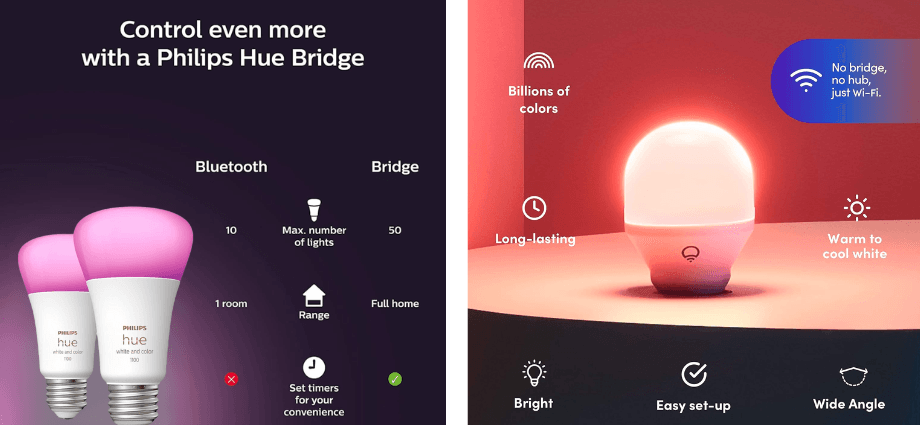
Philips Hue and LIFX are designed to transform your space with versatile lighting options. Their impressive brightness, color accuracy, and customization capabilities make them standout choices.
Light Quality and Brightness
Philips Hue offers a wide range of brightness levels and color accuracy, with products capable of producing 800 to 1600 lumens. The color range includes millions of shades, ensuring you can find the perfect light for any setting. LIFX is known for its exceptional brightness, with products providing up to 1100 lumens. LIFX lights also offer a broad color spectrum, with millions of colors and tunable whites. Both brands deliver excellent light quality and brightness, but LIFX stands out for its higher brightness levels.
Smart Features
Smart features enhance the functionality and convenience of smart lights. Philips Hue supports scheduling and automation, allowing you to set routines and control lights remotely. It integrates well with various smart home systems, including Apple HomeKit, Google Assistant, and Amazon Alexa. LIFX offers similar scheduling and automation capabilities, with robust integration with smart home systems. LIFX lights also feature unique effects, such as visual alerts and music synchronization. Both brands provide comprehensive smart features, but LIFX offers some unique functionalities that may appeal to tech enthusiasts.
App and Voice Control
The ease of use and functionality of mobile apps and voice control options are critical for a seamless smart lighting experience. The Philips Hue app is user-friendly, allowing for easy control of lights, customization of scenes, and setup of routines. It supports voice control through Alexa, Google Assistant, and Siri. The LIFX app is intuitive, offering similar control and customization features. LIFX lights also support voice control with Alexa, Google Assistant, and Siri. Both apps provide a seamless user experience, making it easy to control and customize your smart lights.
Installation and Setup
Philips Hue and LIFX cater to different preferences, with Hue requiring a hub and LIFX offering hub-free simplicity. Both provide straightforward installation and seamless user experiences.
Ease of Installation
Ease of installation is a key consideration for smart lights. Philips Hue requires a hub (Philips Hue Bridge) for full functionality. The installation involves setting up the bridge, connecting lights, and configuring the app. LIFX operates without a hub, making the installation process simpler. Users only need to connect the lights to Wi-Fi and configure them in the app. While Philips Hue requires additional hardware, LIFX offers a more straightforward installation process.
Hub Requirement
Understanding the hub requirement is crucial for smart light setup. The Philips Hue system relies on a hub (Philips Hue Bridge) to connect and control multiple lights. The hub enables advanced features and integrations. LIFX functions without a hub, connecting directly to your Wi-Fi network. This eliminates the need for additional devices and simplifies the setup. The hub-free operation of LIFX lights can be more convenient for users who prefer a simpler setup.
User Experience
The overall setup experience and user feedback provide insights into the practicality of smart lights. Users generally find the Philips Hue setup process straightforward, especially with the help of the Philips Hue app. The requirement for a hub may be a minor inconvenience for some. Users appreciate the simplicity of the hub-free installation and the ease of use of the LIFX app. Both brands offer a positive user experience, but LIFX may be slightly more convenient for those looking for a hassle-free setup.
Pricing and Value

Both Philips Hue and LIFX offer compelling options, balancing cost and features. While Hue provides a wider range, LIFX excels in affordability with its hub-free setup.
Cost Comparison
Pricing is a critical factor when selecting smart lights. Philips Hue products range from $15 for a basic white bulb to $200 for advanced kits. The Philips Hue Bridge is an additional cost. LIFX lights range from $30 to $100, with no need for a separate hub. LIFX offers competitive pricing for its feature-rich products. While Philips Hue offers a broader price range, LIFX provides value by eliminating the need for additional hardware.
Value for Money
Evaluating value for money involves comparing features and costs. Philips Hue is known for its reliability and extensive ecosystem, providing long-term value and seamless integration with other smart home devices. LIFX offers high brightness levels and unique features, delivering excellent value for its price.
Energy efficiency is an important consideration for smart lights. Philips Hue is designed to be energy-efficient, with many products carrying the Energy Star certification.
Lifespan
The lifespan of smart bulbs affects long-term value and cost-efficiency. Philips Hue typically offers a lifespan of up to 25,000 hours, ensuring long-term use. comparable to Philips Hue. Both brands provide durable products with long lifespans, ensuring you get the most out of your investment.
Pros and Cons
Philips Hue excels in ecosystem integration and reliability, while LIFX impresses with brighter, hub-free lights and unique features. Each brand suits different priorities and preferences.
Philips Hue
Advantages:
- Extensive ecosystem and integration with various smart home systems
- Reliable performance and high-quality light output
- Wide range of products and accessories
Drawbacks:
- Requires a hub for full functionality.
LIFX
Advantages:
- Higher brightness levels and excellent color range
- Hub-free operation simplifies installation
- Unique features like visual alerts and music synchronization
Drawbacks:
- Slightly higher cost per bulb
Conclusion
Both Philips Hue and LIFX offer excellent smart lighting solutions, each with its strengths and weaknesses. Your choice will depend on your specific needs and preferences. If you value an extensive ecosystem and seamless integration with other smart home devices, Philips Hue is a great option. On the other hand, if you prefer higher brightness levels, unique features, and a simpler installation process, LIFX might be the better choice. For further assistance, refer to the resources provided by Philips Hue and LIFX.
Share this content: