Comparing Smartwatches: Apple Watch vs. Samsung Galaxy Watch
Smartwatches have become essential tools for staying connected, tracking health, and enhancing daily convenience. Among the top contenders, the Apple Watch and Samsung Galaxy Watch stand out. This article compares these two leading smartwatches, exploring their features, strengths, and ideal use cases to help you make the best choice.
Key Features at a Glance
Design and Build Quality
- Apple Watch: Sleek, minimalist design with a choice of materials and interchangeable bands.
- Samsung Galaxy Watch: Traditional round design, with customizable straps.
Both offer durability, water resistance, and scratch protection, with the design style being a matter of personal preference.
Display Technology
- Apple Watch: Retina display with crisp resolution and vibrant colors.
- Samsung Galaxy Watch: AMOLED display with deep contrasts and bright colors.
Both support Always-On functionality for easy access to time and notifications.
Performance and Hardware
- Apple Watch: Powered by Apple’s S-series chip for smooth performance.
- Samsung Galaxy Watch: Uses Exynos processors, excelling at multitasking.
Samsung offers better battery life (up to 3 days), while Apple lasts around 1.5 days per charge.
Operating System and User Interface
- Apple Watch (WatchOS): Seamless integration with iOS and a wide app ecosystem.
- Samsung Galaxy Watch (Wear OS): Works with both Android and iOS, with better performance on Samsung phones.
Apple’s UI is more cohesive, while Samsung offers flexibility with Google services.
Integration with Devices
- Apple Watch: Exclusively pairs with iPhones, offering Handoff and Continuity features.
- Samsung Galaxy Watch: Compatible with both Android and iOS, but some features work best with Android.
Apple Watch is ideal for iPhone users, while Samsung offers better flexibility for mixed-device households.
Health and Fitness Tracking
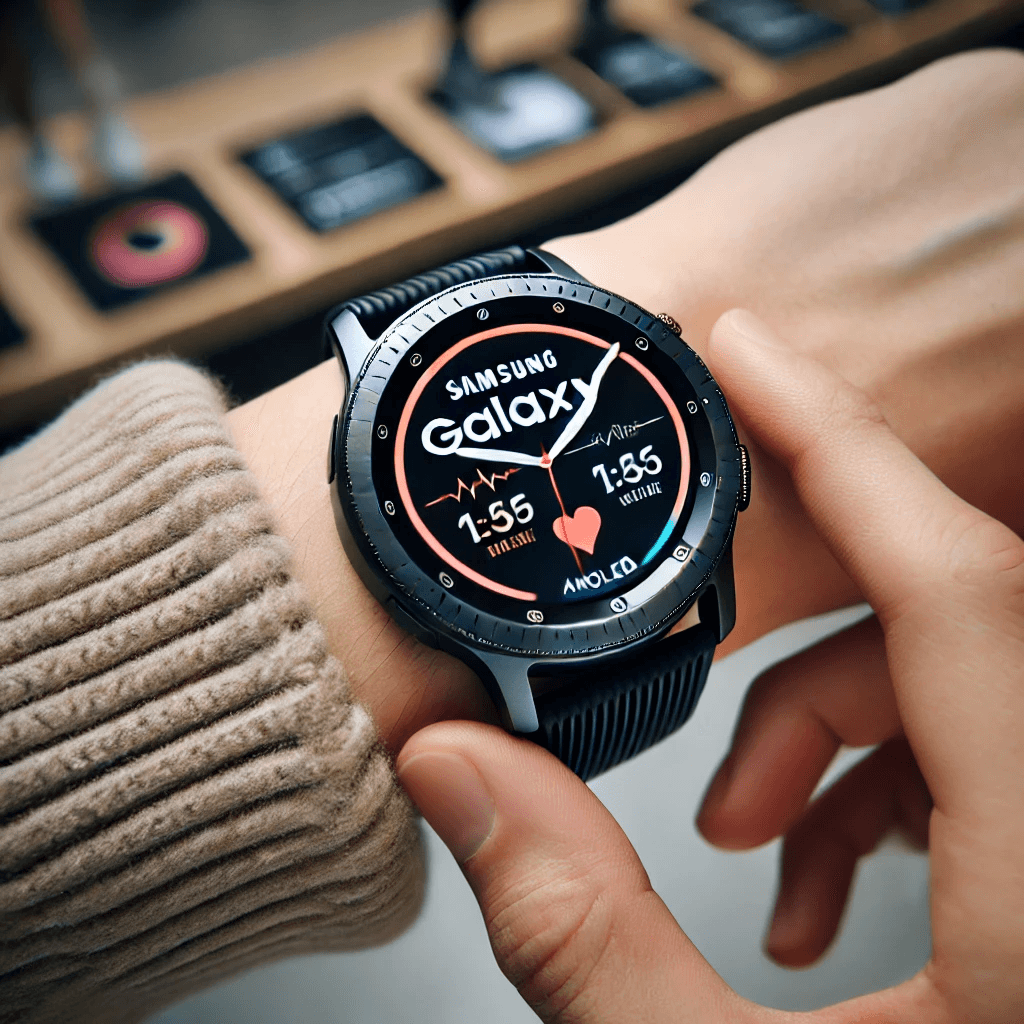
Both watches offer heart rate tracking, ECG, and sleep tracking, with:
- Apple Watch: Advanced sleep tracking and blood oxygen monitoring.
- Samsung Galaxy Watch: Includes body composition analysis for deeper fitness insights.
Fitness Tools
- Apple Watch Fitness+: Guided workouts and personalized recommendations.
- Samsung Fitness Suite: Advanced tracking and third-party app compatibility.
Connectivity and Smart Features
Both watches handle calls, texts, and notifications seamlessly, with voice assistants:
- Apple Watch: Siri integration.
- Samsung Galaxy Watch: Bixby or Google Assistant.
For mobile payments:
- Apple Watch: Apple Pay.
- Samsung Galaxy Watch: Samsung Pay and Google Pay.
Pricing and Value for Money
- Apple Watch: Starts at $250 (SE model), up to $800 (Ultra).
- Samsung Galaxy Watch: Priced between $250 and $400, offering more affordable options.
Apple offers consistent software updates, while Samsung provides updates but with potentially shorter long-term support.
Pros and Cons of Each Smartwatch
Apple Watch
- Pros: Best app ecosystem, seamless iPhone integration, premium design.
- Cons: Limited to iPhones, shorter battery life.
Samsung Galaxy Watch
- Pros: Longer battery life, works with both Android and iOS, traditional design.
- Cons: Fewer apps than Apple Watch, some features work best with Samsung devices.
Choosing the Right Smartwatch for You
Personal Preferences
- Apple Watch: Best for iPhone users who value seamless integration.
- Samsung Galaxy Watch: Ideal for Android users or those who prefer a traditional design.
Budget Considerations
- Apple Watch: Higher-priced premium models.
- Samsung Galaxy Watch: Affordable premium options.
Conclusion
Both the Apple Watch and Samsung Galaxy Watch offer excellent features. Apple excels in ecosystem integration and app support, while Samsung offers better battery life and compatibility across platforms. Your decision should depend on your device ecosystem, lifestyle, and budget.
Share this content: