How 5G Is Changing Mobile Connectivity
The rollout of 5G is transforming how we connect and interact with the digital world. With faster speeds and lower latency, 5G is revolutionizing mobile connectivity for individuals and industries alike.
What Is 5G?
5G is the latest advancement in mobile networks, offering faster speeds and more reliable connections. It’s changing how we use technology in everyday life and across industries.
Basics of 5G Technology
5G is the fifth generation of mobile network technology. It offers significantly faster speeds, reduced latency, and the ability to connect more devices than older networks like 4G.
This leap in technology supports new applications such as real-time video calls, augmented reality (AR), and seamless streaming, making 5G a cornerstone of the digital age.
How 5G Works
5G networks use advanced technology like small cells, higher radio frequencies, and wider bandwidths. This allows for faster data transmission and supports more connected devices simultaneously.
Unlike traditional networks, 5G relies on a dense network of antennas to maintain strong and stable connections even in crowded areas.
Speed and Performance Benefits
5G brings unprecedented speed and responsiveness, changing how we access online content. Faster downloads, smoother streaming, and lower latency redefine mobile experiences for consumers and businesses alike.
Faster Downloads and Streaming
One of the biggest advantages of 5G is its speed. Users can download large files, stream ultra-high-definition videos, and play online games with minimal buffering.
These speed improvements make daily tasks more efficient, whether it’s using cloud-based apps or enjoying entertainment on the go.
- Benefits of 5G speed:
- Downloads finish in seconds instead of minutes.
- Ultra-HD streaming is smooth and uninterrupted.
- Large files can be shared quickly.
Lower Latency for Real-Time Applications
5G significantly reduces latency, which is the time it takes for devices to communicate. This enables real-time experiences, such as live gaming, virtual meetings, and AR/VR applications.
For instance, gamers can enjoy lag-free experiences, while remote workers can hold seamless virtual conferences.
Revolutionizing Industries
5G is not just about speed—it’s also driving innovation across various industries. From healthcare to transportation, this technology is transforming how businesses operate and deliver services.
Healthcare and Remote Monitoring
5G is reshaping healthcare by enabling faster communication and reliable connections for remote patient monitoring and telemedicine services.
Doctors can use wearable health devices to monitor patients’ vitals in real-time, improving care for people in remote areas.
- Key impacts of 5G in healthcare:
- Real-time data sharing between patients and doctors.
- Enhanced telemedicine consultations with clear video and audio.
- Improved emergency response through faster communication.
Autonomous Vehicles and Smart Cities
Self-driving cars rely on 5G for instant communication with sensors, traffic signals, and other vehicles. This ensures safer and more efficient transportation.
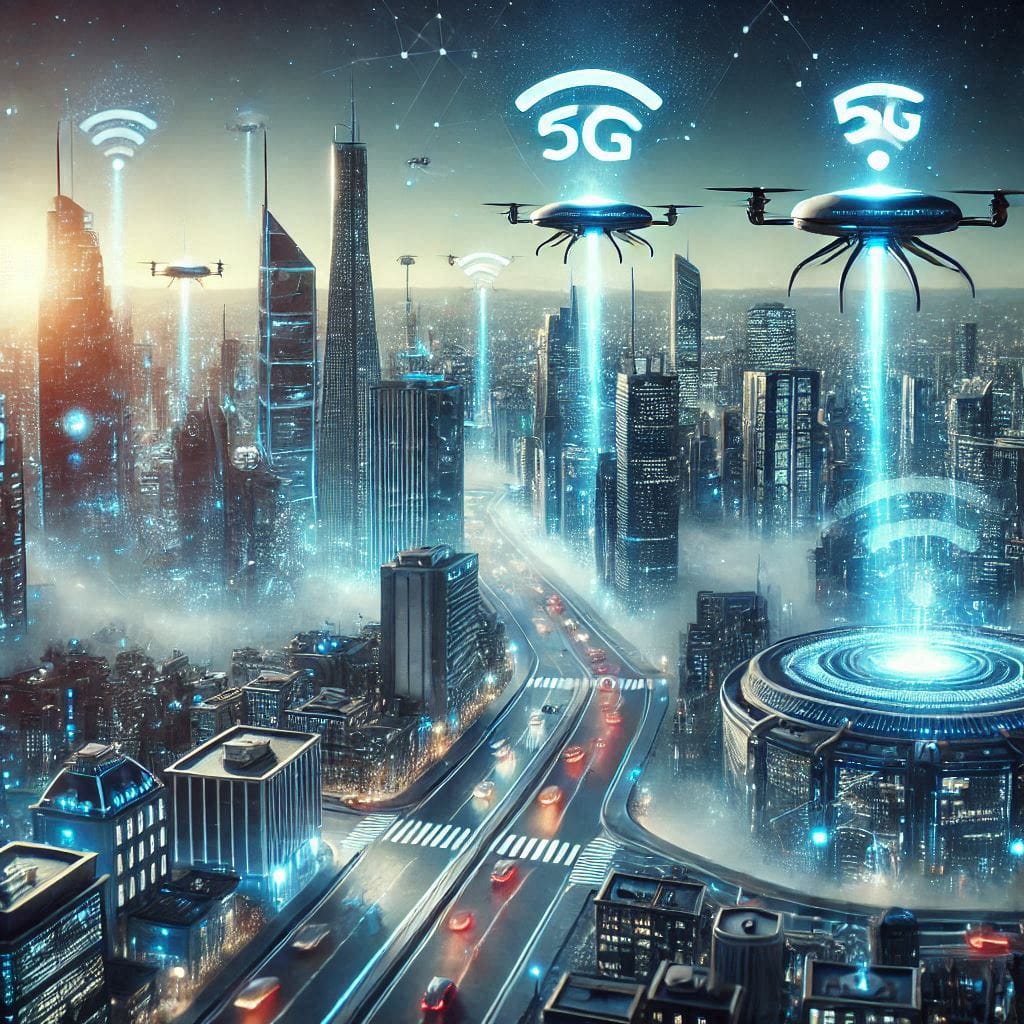
In smart cities, 5G powers applications like IoT-enabled streetlights, energy grids, and public safety systems to improve urban living.
Expanding the Internet of Things (IoT)
The rise of 5G makes it possible to connect billions of devices seamlessly. From homes to industries, IoT devices are smarter, faster, and more secure than ever.
More Connected Devices
5G supports the connection of billions of IoT devices, ranging from smart home appliances to industrial machines. It ensures these devices operate smoothly without network congestion.
For example, smart thermostats, security cameras, and fitness wearables rely on 5G for faster communication and better functionality.
Enhancing IoT Security
With 5G, IoT devices benefit from stronger encryption and secure data transmission. This reduces risks like hacking and ensures privacy for users and businesses.
Secure communication protocols provided by 5G are critical as the number of IoT devices continues to grow.
Challenges of 5G Adoption
Adopting 5G comes with hurdles such as infrastructure costs and privacy concerns. These challenges must be addressed to ensure widespread benefits of this new technology.
Infrastructure and Costs
Implementing 5G requires new equipment, towers, and upgrades, making it costly for providers and governments. These expenses are often passed on to consumers through higher service fees.
Despite these challenges, investments in 5G infrastructure promise long-term benefits like economic growth and better connectivity.
Privacy and Security Concerns
The increased connectivity of 5G raises concerns about data privacy and security. More connected devices mean a larger attack surface for hackers.
Providers must adopt advanced security measures to protect user data and ensure safe communication across networks.
What the Future Holds for 5G
5G is just the beginning of a new era of connectivity. It will pave the way for future innovations, bridging global digital divides and unlocking endless possibilities.
Advancing Technology Beyond 5G
The future of mobile connectivity extends beyond 5G, with research already underway for 6G networks. These advancements will deliver even faster speeds and greater connectivity.
As technology evolves, 5G will serve as a foundation for innovations in artificial intelligence, robotics, and communication systems.
Empowering Global Connectivity
5G has the potential to bridge digital divides by bringing fast internet to underserved regions. This enables greater access to education, healthcare, and economic opportunities.
By connecting people and devices worldwide, 5G opens doors for global collaboration and innovation.
Conclusion
5G is not just an upgrade in mobile technology—it’s a transformation of how the world connects and communicates. With faster speeds, reduced latency, and the ability to connect billions of devices, 5G opens doors to endless possibilities. From revolutionizing industries like healthcare and transportation to empowering global connectivity, its impacts are profound and far-reaching.
As we address challenges like infrastructure costs and privacy concerns, the potential of 5G becomes even clearer. By embracing this technology, we are setting the stage for a more connected and innovative future.
Share this content: