How Augmented Reality Is Changing Shopping Experiences
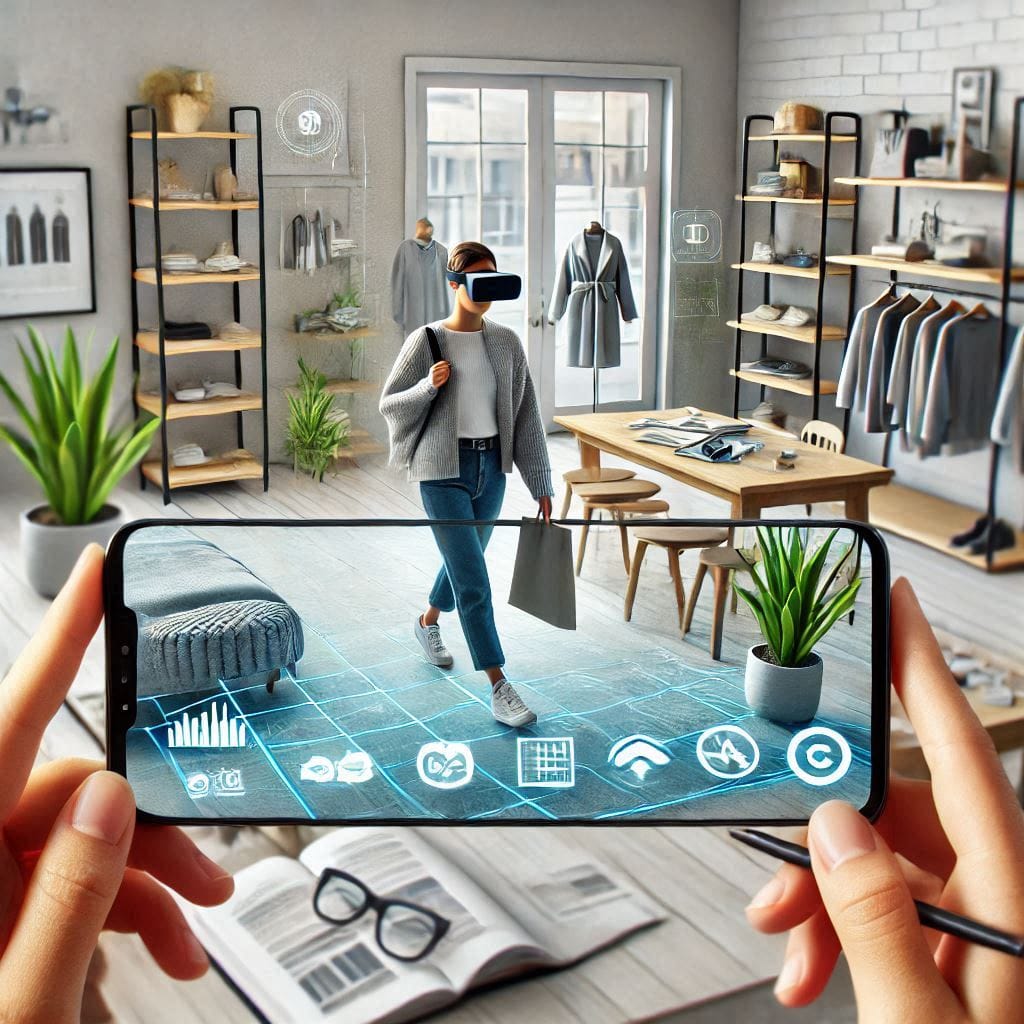
Technology has revolutionized many aspects of our lives, and shopping is no exception. Among the most exciting innovations in the shopping world is Augmented Reality (AR), which is changing the way we shop. AR combines real-world environments with digital elements, allowing shoppers to interact with virtual objects in real time. This technology has made shopping more engaging, convenient, and personalized, both online and in stores. In this article, we will explore how AR is transforming the shopping experience for both customers and retailers.
What is Augmented Reality (AR)?
Definition of Augmented Reality
Augmented Reality (AR) is a technology that overlays digital content—such as images, sounds, or videos—onto the physical world. Unlike Virtual Reality (VR), which creates a completely artificial environment, AR enhances the real world by adding virtual elements that users can interact with. For instance, when you look at your phone screen, AR can show you how a product would look in your home or how a piece of clothing fits without actually trying it on.
How AR Works
AR works by using devices such as smartphones, tablets, or AR glasses to display digital images on top of the physical world. The device’s camera captures the real world, while software identifies surfaces and objects where virtual content can be placed. Sensors and GPS help track the user’s movement and adjust the virtual content accordingly. For example, AR can make a piece of furniture appear in your living room when viewed through your phone’s camera.
The Impact of AR on the Shopping Experience
Augmented Reality is reshaping the shopping experience in many ways. It is enhancing both online and in-store shopping by providing more interactive, personalized, and convenient ways to shop.
Improving Online Shopping
AR has taken online shopping to the next level by offering a “try before you buy” experience. Online shoppers can use AR technology to visualize how products will look in their environment or on themselves.
- Fashion: Customers can try clothes and accessories virtually without needing to physically try them on. AR apps like virtual try-ons let shoppers see how clothes fit or how makeup looks on their skin.
- Home Goods: Many furniture retailers now offer AR apps that allow customers to see how furniture will look in their home before making a purchase.
AR has made online shopping more immersive, reducing the uncertainty of purchasing products online.
Enhancing In-Store Shopping
AR has also made its way into brick-and-mortar stores, where it enhances the in-store shopping experience.
- Interactive Displays: Many stores are using AR-powered displays to provide customers with more detailed information about products.
- Personalized Shopping: In some stores, AR can recognize individual customers and offer personalized promotions or product suggestions based on their preferences.
AR bridges the gap between the digital and physical shopping worlds, making in-store visits more engaging and informative.
Benefits of AR for Shoppers
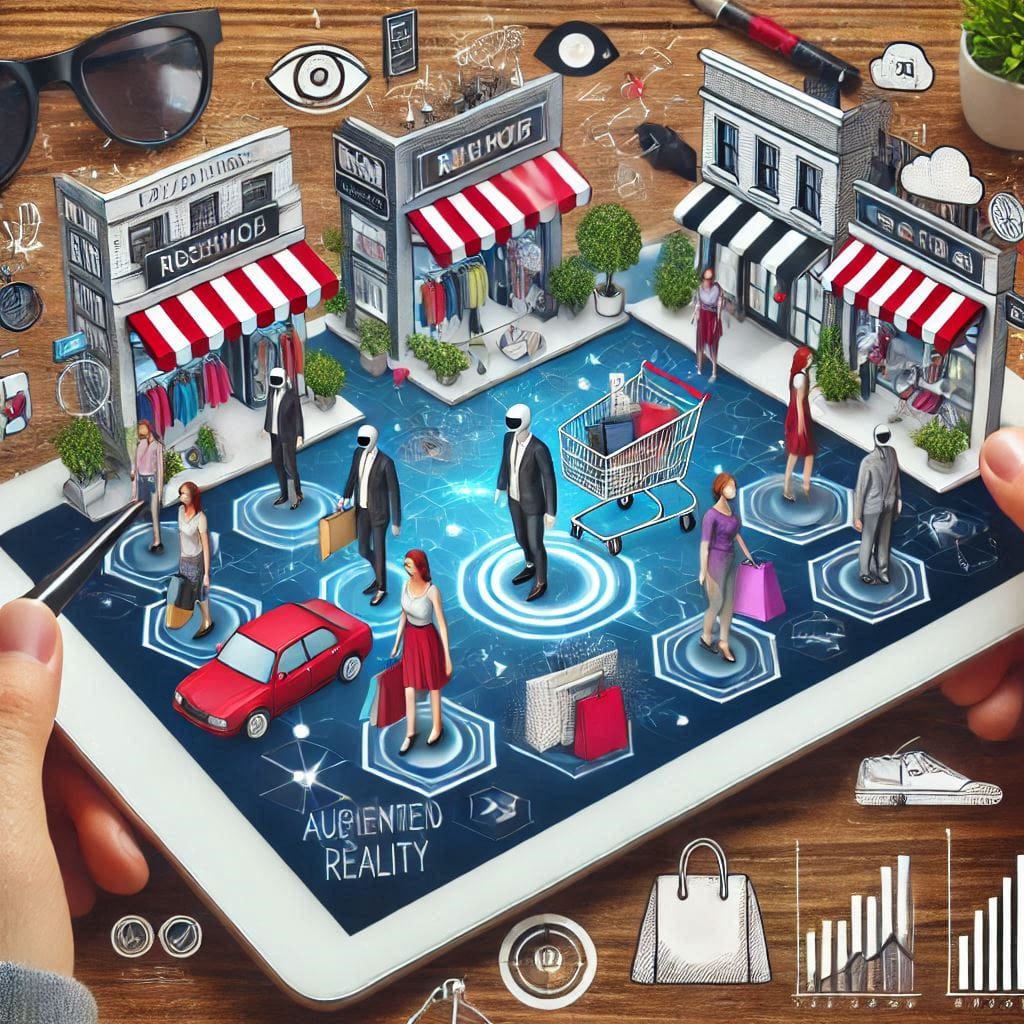
AR offers several benefits to shoppers, making the shopping process more enjoyable, efficient, and confident.
Convenience and Time-Saving
- Virtual Try-Ons: Shoppers can try out clothes, makeup, or even furniture without leaving their homes. This saves time and effort, as they don’t need to physically visit stores to see if a product suits them.
- Instant Access to Information: With AR, customers can instantly view details about products, such as reviews, prices, and specifications, simply by pointing their device at an item.
AR makes the shopping process faster and more efficient, reducing decision fatigue and the time spent on searching for the right product.
Boosting Confidence in Purchase Decisions
AR technology gives shoppers a clearer view of products, making them feel more confident about their purchase decisions.
- Realistic Visualizations: AR helps customers see how products fit into their space or how they would look on them. This reduces doubts and boosts trust in their purchasing decisions.
- Try Before You Buy: Virtual try-on technology in fashion and beauty items allows customers to test products virtually, which can reduce the fear of making a wrong choice.
With AR, shoppers are better equipped to make informed decisions, reducing the likelihood of returns or dissatisfaction.
How AR is Benefiting Retailers
Retailers also benefit from AR technology by increasing customer engagement and improving their operations.
Increasing Engagement and Sales
- Higher Engagement: AR creates an interactive shopping experience that captures customers’ attention and keeps them engaged longer.
- Increased Conversion Rates: By offering a more interactive experience, AR can lead to higher conversion rates, as customers are more likely to make a purchase after visualizing the product in their real-world environment.
AR helps retailers boost sales by encouraging customers to spend more time exploring and interacting with their products.
Cost Efficiency for Retailers
- Reducing Return Rates: AR allows customers to make better purchasing decisions, reducing the number of returns. For example, customers can see exactly how furniture will look in their home before buying it, which helps avoid the disappointment of a product not fitting or matching expectations.
- Optimizing Store Layouts: Retailers can use AR to create more efficient and personalized store layouts that appeal to customers and encourage higher sales.
AR can also lower marketing costs by enhancing online and offline customer experiences without the need for expensive physical displays or materials.
Examples of AR in Retail
Several companies are already using AR to enhance the shopping experience for their customers. Let’s look at a few examples.
IKEA’s AR App for Furniture Shopping
IKEA has embraced AR with its IKEA Place app, which allows users to visualize how furniture will look in their homes before purchasing. The app uses AR to place furniture in the room, helping customers determine whether the item fits and complements their existing décor.
Sephora’s Virtual Try-On Tool
Sephora, a leading cosmetics retailer, offers a virtual try-on tool powered by AR. Customers can try on makeup virtually using their smartphone, seeing how different shades and products will look on their skin. This tool makes it easier for customers to find the right makeup without having to test it physically.
AR in Fashion Retailers (e.g., Zara and Nike)
Fashion retailers like Zara and Nike have also adopted AR technology to help customers try on clothes and shoes virtually. Customers can use their mobile devices to see how an item will look on them, making it easier to find the right size and style.
The Future of AR in Retail
The potential for AR in retail is vast, and the technology will continue to evolve, offering even more personalized and immersive experiences.
AR in Personalized Shopping
In the future, AR could make shopping even more personalized by using customer data to create tailored shopping experiences. AR could display promotions or product suggestions based on a customer’s preferences or purchase history, further enhancing the shopping experience.
The Role of AI and AR in Retail
The combination of AR and Artificial Intelligence (AI) could bring even more innovations to retail. AI could help AR applications become smarter, predicting customers’ needs and providing even more relevant product recommendations and shopping experiences.
Limitations and Challenges
While AR offers tremendous potential, it also faces challenges. These include high development costs, the need for widespread adoption of AR-compatible devices, and potential technical limitations such as lag or glitches in the AR experience. Moreover, not all customers may be comfortable with AR technology or have access to the necessary devices.
Conclusion
Augmented Reality is revolutionizing the shopping experience by offering customers more interactive, engaging, and personalized ways to shop. From trying on clothes virtually to visualizing furniture in their homes, AR helps shoppers make better purchasing decisions and saves time. Retailers are benefiting too, as AR increases customer engagement and reduces costs. As AR technology continues to improve, it’s clear that its role in shaping the future of shopping will only grow. The possibilities are endless, and we can expect AR to become an essential part of both online and in-store shopping in the coming years.
Share this content: