Comparing Google Nest Hub vs Amazon Echo Show
Smart displays have become an essential part of modern homes, providing convenience, entertainment, and smart home control. In this article, we will compare two popular smart displays: Google Nest Hub and Amazon Echo Show, to help you choose the best one for your needs.
Key Features Comparison
Smart displays have become an essential part of modern homes, offering convenience, functionality, and seamless smart home integration. Below is a comparison of their key features to help you decide.
Display and Design
Both Google Nest Hub and Amazon Echo Show offer impressive displays and sleek designs. The Google Nest Hub features a 7-inch screen with a resolution of 1024 x 600 pixels, and a compact, minimalist design with a fabric-covered base. On the other hand, the Amazon Echo Show is available in 5.5-inch, 8-inch, and 10.1-inch models, with resolutions ranging from 960 x 480 pixels to 1280 x 800 pixels, and a modern look with a smooth finish. Both devices are aesthetically pleasing and can blend into any home décor.
Audio Quality
Sound performance is crucial for a smart display, especially if you plan to use it for music and videos. The Google Nest Hub features a full-range speaker that delivers clear and balanced sound, suitable for casual listening. In contrast, the Amazon Echo Show offers dual 2-inch neodymium drivers and a passive bass radiator (Echo Show 8), providing richer and more robust sound, better for immersive audio experiences. If audio quality is a top priority, the Echo Show offers a more powerful sound experience.
Smart Home Integration
Both devices serve as central hubs for smart home control. The Google Nest Hub is compatible with Google Assistant-enabled devices and integrates well with the Google Home ecosystem. Similarly, the Amazon Echo Show is compatible with Alexa-enabled devices and integrates well with the Amazon Alexa ecosystem. Both displays are user-friendly and make it easy to control compatible smart home devices.
User Experience
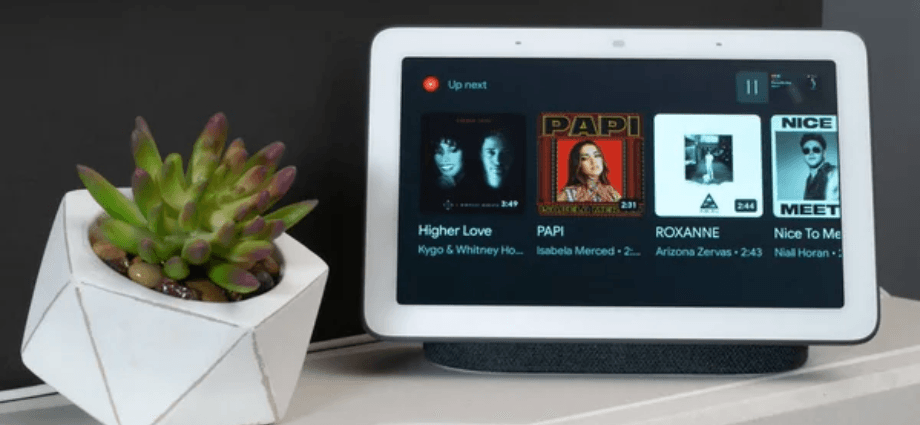
A smart display’s user experience is determined by its interface, voice assistant performance, and entertainment features, ensuring seamless interaction and functionality tailored to individual needs.
User Interface
The user interface plays a significant role in the overall experience of using a smart display. The Google Nest Hub offers intuitive and simple navigation, allowing for easy personalization of the home screen with preferred shortcuts and widgets. Meanwhile, the Amazon Echo Show features easy swipe and touch controls, with various display themes and home screen customization options. Both interfaces are designed for ease of use and can be tailored to individual preferences.
Voice Assistant Performance
The effectiveness of the voice assistant is a key factor in choosing a smart display. The Google Nest Hub uses Google Assistant, which is highly responsive and accurate in understanding commands. The Amazon Echo Show uses Alexa, which is quick and reliable, with a broad range of skills. Both voice assistants are capable and provide a seamless user experience.
Entertainment Features
Smart displays are often used for entertainment purposes. The Google Nest Hub supports streaming services like YouTube, Netflix, and Spotify, and offers additional features such as displaying Google Photos and interactive games. The Amazon Echo Show supports Amazon Prime Video, Netflix, Hulu, and more, and includes features like video calling and Echo Show-specific apps. Each device offers ample entertainment options, catering to different streaming preferences.
Additional Functionalities
Modern smart displays go beyond basic features, offering advanced functionalities that enhance connectivity, ensure privacy, and deliver added value for users.
Communication Features
Both smart displays come with communication features that enhance connectivity. The Google Nest Hub supports video calling through Google Duo and voice calls through Google Assistant. The Amazon Echo Show supports Skype and Amazon’s Drop-In feature, as well as intercom functionality within the Alexa ecosystem. These communication features make staying connected with family and friends easier.
Privacy and Security
Privacy is an important consideration for smart device users. The Google Nest Hub ensures data protection through Google’s privacy policy and does not have a built-in camera for added privacy. The Amazon Echo Show offers data protection through Amazon’s privacy policy and includes a built-in camera with a shutter for privacy. Both devices offer robust privacy features to protect user data and ensure a secure experience.
Extra Features
Each smart display comes with unique features that set them apart. The Google Nest Hub includes Sleep Sensing (Nest Hub 2nd Gen) and receives regular software updates from Google. The Amazon Echo Show offers a rotating display (Echo Show 10) and regular software updates from Amazon. These extra features add value and enhance the functionality of the devices.
Price and Value for Money
Smart displays vary in price, offering different features and capabilities. Understanding their cost and value helps in choosing the best option for your needs.
Cost Comparison
Pricing is a crucial factor when choosing a smart display. The Google Nest Hub typically ranges from $79 to $99, while the Amazon Echo Show prices vary by model, ranging from $64.99 (Echo Show 5) to $249.99 (Echo Show 10). Both devices are often available at discounted rates during sales events.
Value Proposition
Assessing the value for money involves comparing features and costs. The Google Nest Hub offers great value with its user-friendly interface and Google ecosystem integration. The Amazon Echo Show provides more features for higher-end models, such as better audio and a rotating display. Consider the features most important to you when evaluating the value of each device.
Pros and Cons
When choosing between smart displays, it’s essential to weigh the advantages and drawbacks of each device to find the one that best suits your needs.
Google Nest Hub
Advantages:
- Easy integration with Google services
- Compact and camera-free for privacy
- Affordable price
Drawbacks:
- Limited audio performance compared to Echo Show
- Smaller screen size options
Amazon Echo Show
Advantages:
- Superior audio quality
- Extensive smart home compatibility with Alexa
- Various screen size options
Drawbacks:
- Higher price for advanced models
- Privacy concerns with built-in camera
Conclusion
Both Google Nest Hub and Amazon Echo Show offer excellent features and functionalities. Your choice will depend on your specific needs and preferences. If you prefer integration with Google services and a more compact design, the Nest Hub is a great option. If you value superior audio quality and extensive smart home compatibility, the Echo Show might be the better choice. For further assistance, refer to the resources provided by Google and Amazon.
Share this content: