New Developments in Augmented Reality Applications
Augmented reality (AR) blends digital elements with the real world, creating interactive and immersive experiences. This technology is rapidly advancing and transforming various industries. This article explores the latest developments in AR and their impact.
AR in Healthcare
Healthcare has embraced augmented reality to improve medical training, patient care, and accessibility for individuals with disabilities. It is making complex medical tasks easier and more efficient.
Enhancing Medical Training
AR provides a safe and interactive platform for training doctors and medical students. Simulations offer hands-on experience without the risks of real procedures.
- Simulated surgeries help doctors practice difficult procedures.
- 3D anatomy models enhance students’ understanding of the human body.
- Reduces reliance on cadavers and physical resources for training.
By making training more accessible and cost-effective, AR is reshaping medical education and boosting confidence in medical professionals.
Supporting Patient Care
For patients, AR offers better understanding of medical conditions through 3D visuals and interactive models. Doctors can also use AR tools to guide patients during recovery.
AR applications allow remote diagnostics and treatments, especially helpful in areas with limited access to healthcare professionals.
Assisting Disabled Individuals
AR supports people with disabilities by providing tools that improve independence. Examples include navigation aids for visually impaired users and real-time sign language translators for those who are hearing impaired.
These innovations make healthcare more inclusive, offering new opportunities for accessibility.
AR in Education and Training
Education and corporate training have greatly benefited from AR’s ability to make learning interactive and engaging. It improves knowledge retention and skill acquisition through immersive experiences.
Immersive Learning Experiences
AR transforms traditional education by making lessons dynamic and engaging. Students can explore historical landmarks, conduct virtual science experiments, and visualize complex concepts.
- Virtual field trips take students to inaccessible locations.
- 3D visuals simplify challenging topics.
- Interactive lessons keep students focused and involved.
By creating personalized and exciting learning environments, AR ensures better educational outcomes.
Corporate and Industrial Training
In industries like manufacturing and aviation, AR offers safe and effective employee training. Workers can practice real-life scenarios without facing actual risks.
This approach saves time and money for companies while ensuring that employees are well-prepared for their roles.
AR in Retail and E-Commerce
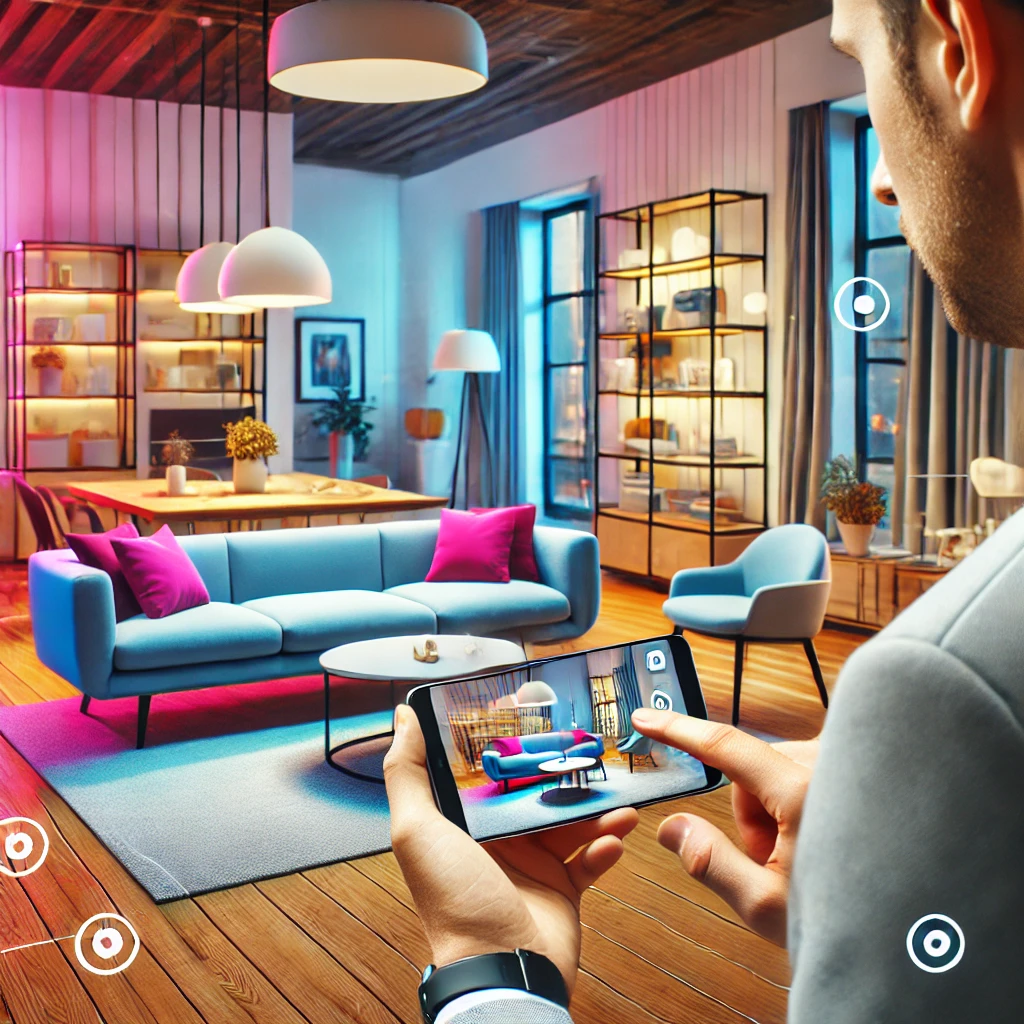
Retail and e-commerce sectors are leveraging AR to enhance customer experiences. From virtual try-ons to in-store navigation, AR is revolutionizing how people shop.
Virtual Try-Ons
AR allows customers to preview products such as clothing, accessories, and makeup before buying. This technology improves confidence in online purchases and reduces returns.
- Fashion apps help users visualize outfits.
- Beauty tools let shoppers test makeup virtually.
- Furniture apps show how items will fit in a room.
By offering personalized and convenient shopping, AR is changing how consumers interact with brands.
Enhancing In-Store Shopping
Inside physical stores, AR apps guide customers, provide product details, and create a seamless shopping experience.
Retailers benefit from increased customer engagement and satisfaction, resulting in stronger brand loyalty.
AR in Gaming and Entertainment
Gaming and entertainment industries were early adopters of AR technology. Today, they continue to push its boundaries with innovative applications.
Expanding Immersive Gaming
Games like Pokémon GO demonstrate AR’s potential in creating engaging and interactive experiences. Advancements in AR technology now offer even more realistic gameplay.
AR gaming blends the real world with digital elements, making it more immersive and enjoyable for players.
Interactive Storytelling
AR enhances storytelling by integrating real-world interactions. From films to theme parks, it adds a new layer of engagement for audiences.
- Theme parks use AR for exciting ride experiences.
- Movies integrate AR for audience participation.
- Theater productions use AR visuals for dramatic effects.
These applications are redefining entertainment, offering audiences unique and memorable experiences.
Challenges in AR Development
Despite its progress, augmented reality faces challenges that hinder its widespread adoption. These include high costs, privacy issues, and hardware limitations.
High Development Costs
Creating AR applications requires expensive software, skilled professionals, and advanced hardware. Smaller companies often struggle to compete due to these costs.
Addressing these financial barriers will be crucial for making AR more accessible to all industries.
Privacy and Ethical Concerns
AR relies on user data to function effectively, raising concerns about privacy and data security. Ethical guidelines are necessary to ensure responsible use.
- Data storage must be secure to prevent breaches.
- Companies should prioritize transparency and user consent.
- Developers must follow ethical practices to protect users.
Solving these issues is key to building trust in AR technology.
Hardware Limitations
Using AR often requires specialized devices, which can be expensive and inaccessible to many users. Improving the affordability of AR hardware will help more people benefit from this technology.
Making AR devices lightweight and user-friendly will further enhance adoption rates.
Conclusion
Augmented reality is transforming industries with its ability to merge digital content with the real world. From improving healthcare to revolutionizing retail, AR offers countless possibilities.
However, challenges like high costs, privacy concerns, and hardware limitations must be addressed for AR to achieve its full potential. With ongoing innovation, AR promises to shape the future of technology and enrich lives across the globe.
Share this content: